


Bayesian Paradigm Integration for Camping World’s Marketing Strategy
To operationalize the Bayesian Paradigm within Camping World’s marketing strategy, the organization should shift from traditional static demographic segmentation to a Dynamic Posterior Probability Model. This model continuously updates the probability that a lead will convert—whether through a trade‑in, a new RV purchase, or a service plan renewal—based on new evidence collected at each stage of the customer journey. Evidence may include membership status (e.g., Good Sam), channel origin (e.g., Costco partnership), behavioral responses (e.g., engagement with transparency‑focused advertising), or regional economic conditions.
This approach enables Camping World to allocate marketing resources, sales labor, and inventory more efficiently by identifying which leads carry the highest probability of conversion after incorporating real‑time behavioral signals.
1. Bayesian Mathematical Application: Trade‑In “Equity” Model
A major strategic priority for Camping World is capturing the 4.1 million households that purchased RVs during the 2020–2022 pandemic surge (Camping World Holdings, Inc., 2026). These owners are now entering what management describes as a “manageable equity position,” meaning their loan‑to‑value ratios have improved enough to make a trade‑in financially feasible. This group represents the largest and most predictable replacement cycle in the RV industry.
To quantify the likelihood that a given lead belongs to this high‑value segment, Bayesian inference can be applied to calculate the Posterior Probability that a respondent is a Pandemic‑Era Upgrader after engaging with a “No Hidden Fee” transparency campaign. This campaign is strategically designed to counter competitors such as Bish’s RV, which emphasize transparent pricing (RV Dealers Boise, 2026).
1.1 Variable Definitions
Prior Probability P(H)
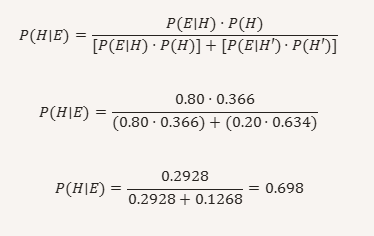
The prior represents the baseline probability that any randomly selected RV owner is a pandemic‑era buyer. With 11.2 million RVs currently in use and 4.1 million purchased during the pandemic:
P(H)=4.1M11.2M=0.366
This means that before observing any new evidence, there is a 36.6% chance that a given RV owner belongs to this high‑value segment (Moreau, 2026; Camping World Holdings, Inc., 2026).
Likelihood P(E|H)
This likelihood represents the probability that a pandemic‑era buyer responds to a transparency‑focused advertisement. Given management’s emphasis on customer frustration with hidden fees and the industry‑wide shift toward transparent pricing, a high likelihood is appropriate:
P(E∣H)=0.80
Likelihood P(E|H′)
This likelihood represents the probability that a non‑pandemic owner responds to the same advertisement. Because non‑pandemic buyers are less sensitive to transparency messaging:
P(E∣H′)=0.20
Posterior Probability P(H|E)
The posterior represents the updated probability that a respondent is a pandemic‑era upgrader after observing their engagement with the transparency campaign.
1.2 Bayesian Calculation
2. Visualization: Prior vs. Posterior Probabilities by Evidence Channel
The table below demonstrates how the probability of identifying a high‑value upgrader increases when incorporating evidence from strategic partnerships and membership programs.

2.1 Interpretation of the Table
-
Random leads remain at the baseline probability because no new evidence is introduced.
-
Costco leads show a substantial increase due to the partnership’s strong alignment with Camping World’s target demographic and management’s projection of 3,000–5,000 incremental unit sales (Camping World Holdings, Inc., 2026; RV Business, 2026a).
-
Good Sam members show the highest posterior probability because Good Sam is described as the “bedrock of the RV community” and the “cornerstone of future growth” (Camping World Holdings, Inc., 2026).
This demonstrates how Bayesian updating can quantify the value of each channel and guide resource allocation.
3. Recommendations for Implementation
1. Weight the Costco Partnership
Because Costco leads carry a significantly higher posterior probability of conversion, Camping World should:
-
Assign Costco leads to senior sales staff.
-
Increase follow‑up frequency for Costco‑originated inquiries.
-
Prioritize inventory that aligns with Costco buyer preferences (e.g., mid‑range towables).
-
Integrate Costco membership verification into CRM workflows.
This aligns with management’s expectation of 3,000–5,000 incremental unit sales from the partnership.
2. Adjust for Negative Evidence (Weather Disruptions)
In early 2026, severe weather forced closures at 60 locations, resulting in a loss of 1,500 units (Camping World Holdings, Inc., 2026). Bayesian “zero‑evidence” modeling should be used to:
-
Reduce ad spend in snow‑affected regions.
-
Increase digital investment in unseasonably warm markets such as Arizona and Denver.
-
Reallocate inventory to regions where demand remains stable.
-
Update priors weekly based on weather‑driven foot traffic.
This ensures that marketing and sales efforts remain aligned with real‑time environmental conditions.
3. Update Priors for the Millennial Shift
Millennials are projected to reach 40% of RV ownership by 2026 (Moreau, 2026). To incorporate this shift:
-
Increase the prior probability for leads under age 40.
-
Adjust likelihoods for used travel trailers, which are growing 7% faster than new units (Moreau, 2026; Camping World Holdings, Inc., 2026).
-
Prioritize digital channels favored by younger buyers.
-
Integrate age‑based Bayesian weights into CRM scoring models.
This ensures that the posterior probabilities reflect the evolving demographic composition of the RV market.
References
- Camping World Holdings, Inc. (2026, February 25). Q4 2025 earnings transcript. The Motley Fool. https://www.fool.com/earnings/call-transcripts/2026/02/25/camping-world-cwh-q4-2025-earnings-call-transcript/
- RV Business. (2026, February 25). Camping World reports $6.4 billion in revenue for 2025. https://rvbusiness.com/camping-world-reports-6-4-billion-in-revenue-for-2025/
- RV Dealers Boise. (2026, February). The ultimate Meridian RV showdown: Your complete guide to shopping at Bish's RV vs. Camping World. https://rvdealersboise.com/bishs-rv-vs-camping-world/
AI Disclosure:
Portions of this document were generated with the assistance of artificial intelligence to support research synthesis, formatting, and content development. All data, interpretations, and final decisions were reviewed and approved by the author for accuracy and alignment with project objectives.
Add comment
Comments